Thermal Management in High-Density Circuit Boards
Thermal Management in High-Density Circuit Boards
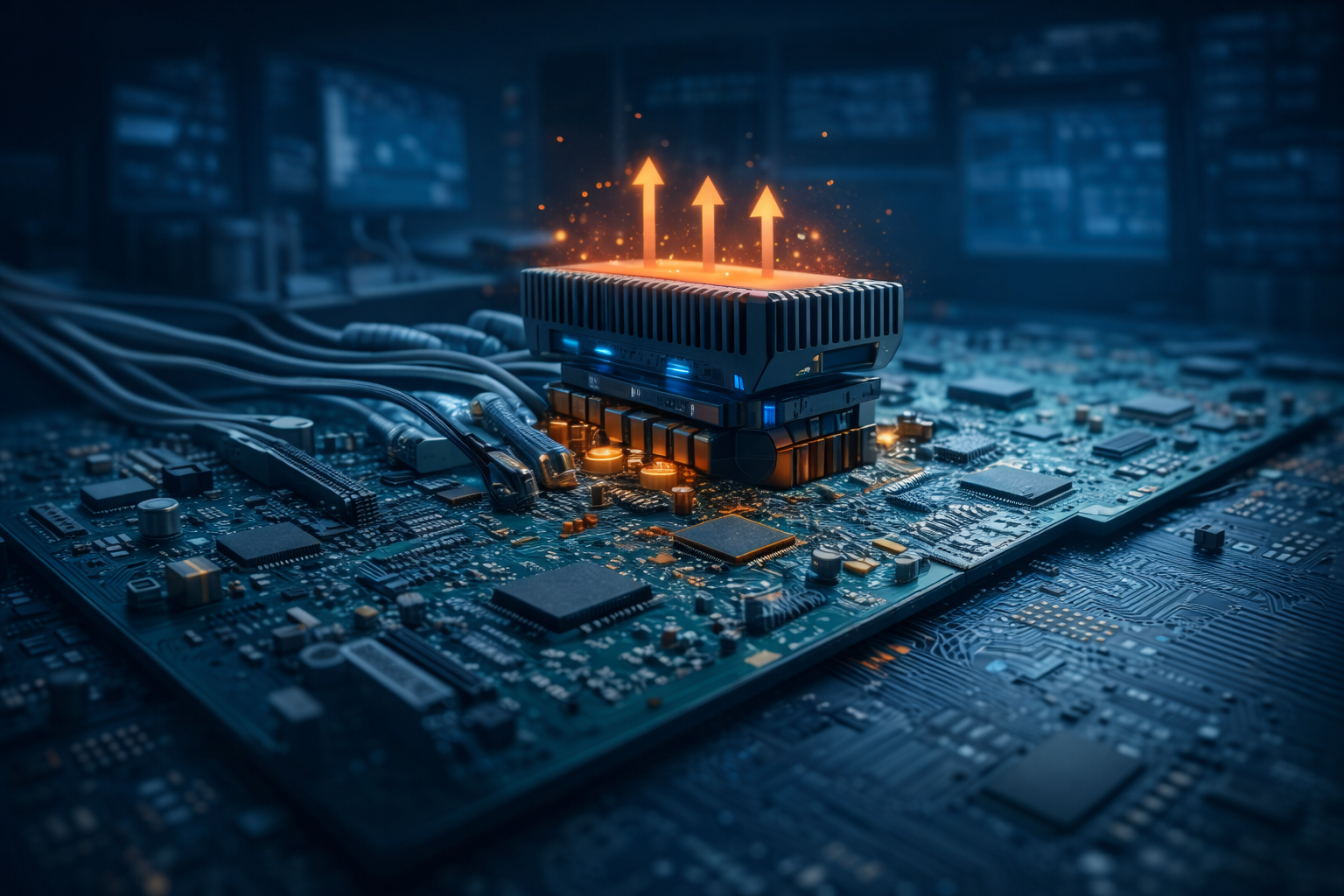
Effective thermal management is one of the most critical challenges in the design of High-Density Interconnect (HDI) circuit boards. As component density increases and modern processors operate at higher power levels and switching frequencies, localized heat generation becomes inevitable. Without proper thermal management, excessive heat can degrade system performance, shorten component lifespan, and ultimately lead to system failures.
A comprehensive thermal strategy extends well beyond the use of heat sinks. It begins at the architectural design stage, where component placement, thermal layer design, thermal vias, and airflow paths are carefully engineered to optimize heat dissipation. Thermal simulation performed before manufacturing also plays a vital role by identifying potential hot spots early, allowing engineers to refine the design before production.
In industrial and mission-critical systems, thermal stability is directly linked to system reliability. Rapid temperature variations can introduce mechanical stress, alter electrical characteristics, and reduce overall system accuracy. For this reason, thermal design should always be developed alongside electrical and mechanical analyses as part of an integrated engineering process.
At ZHARFAM, thermal management is treated as an integral part of systems engineering. From conceptual design through validation and final testing, every operational and environmental scenario is carefully evaluated to ensure stable, reliable performance under real-world operating conditions.